
You Can’t Take Provincetown Out of the Person・A Life Well Lived: Stories from Provincetown to the World
There are some places you leave—and some places that never leave you.
For Tom Dirsa, Provincetown is the latter.
“I think my wife would say I’m a bit of a ‘bullshit ar st,’” he says with a laugh. But the truth is simpler: Tom is a storyteller. And like many of the best storytellers, his stories don’t begin with writing—they begin with where he came from.
Born in Newport, Rhode Island, Tom’s roots trace directly back to Provincetown through his mother, whose family emigrated from Portugal. His father, a Navy man from Lowell, made a deliberate decision in 1946—one that would define Tom’s life.
“He wanted me to have stability,” Tom recalls. “Not moving from base to base in the military. It had a special memory for Tom’s father as the place that he met his true love and the woman he would spend the rest of his life with. So we moved to Provincetown.”
That choice anchored Tom in a place that, in the 1940s and ’50s, was s ll very much a working town—defined by fishing, family businesses, and a rhythm of life tied closely to the land and the sea.
“You can take the person out of Provincetown,” he says, “but you can’t take Provincetown out of the person.”
Growing up in Provincetown wasn’t about landmarks—it was about the people and the routines that made the town what it was.
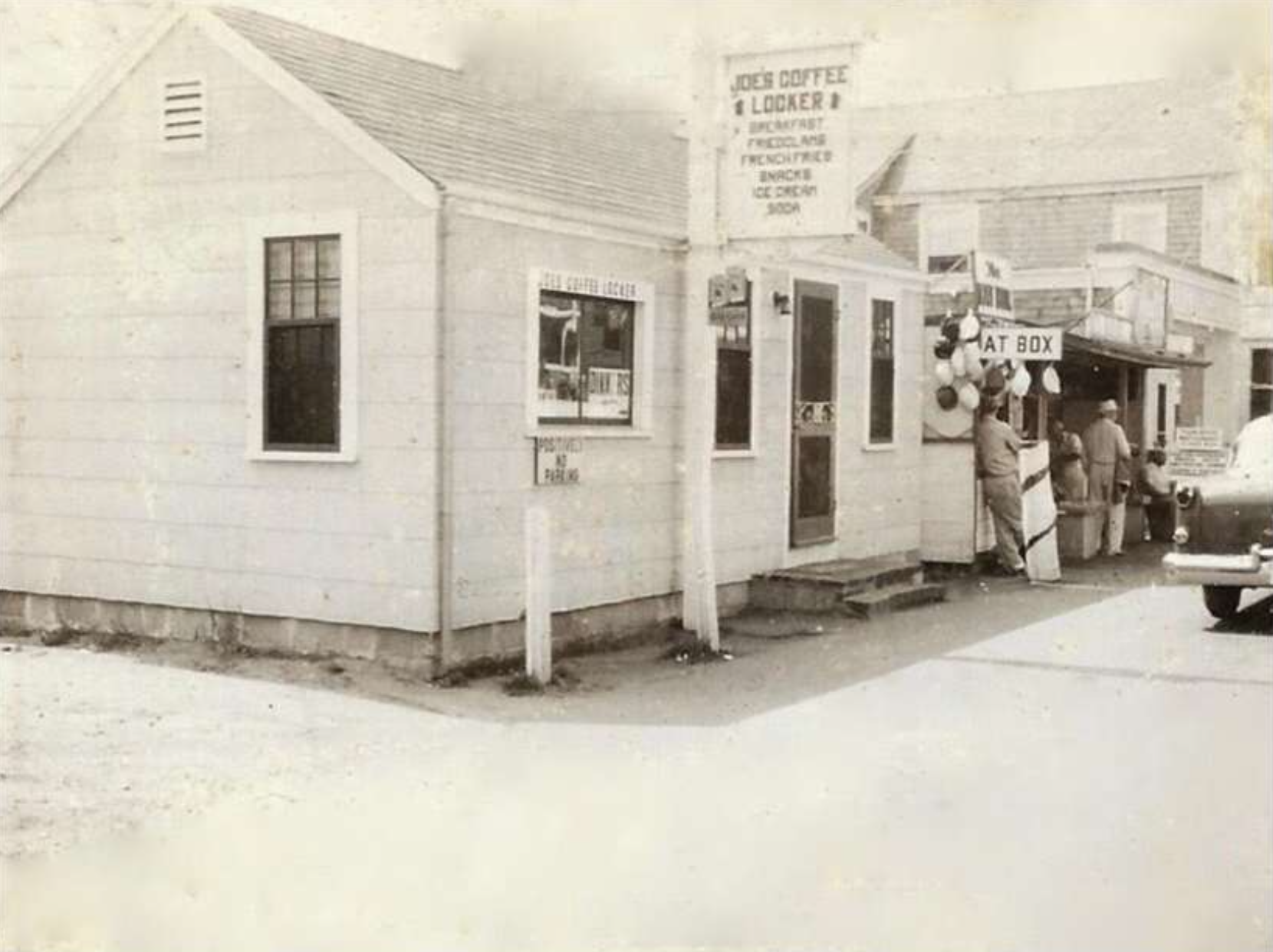
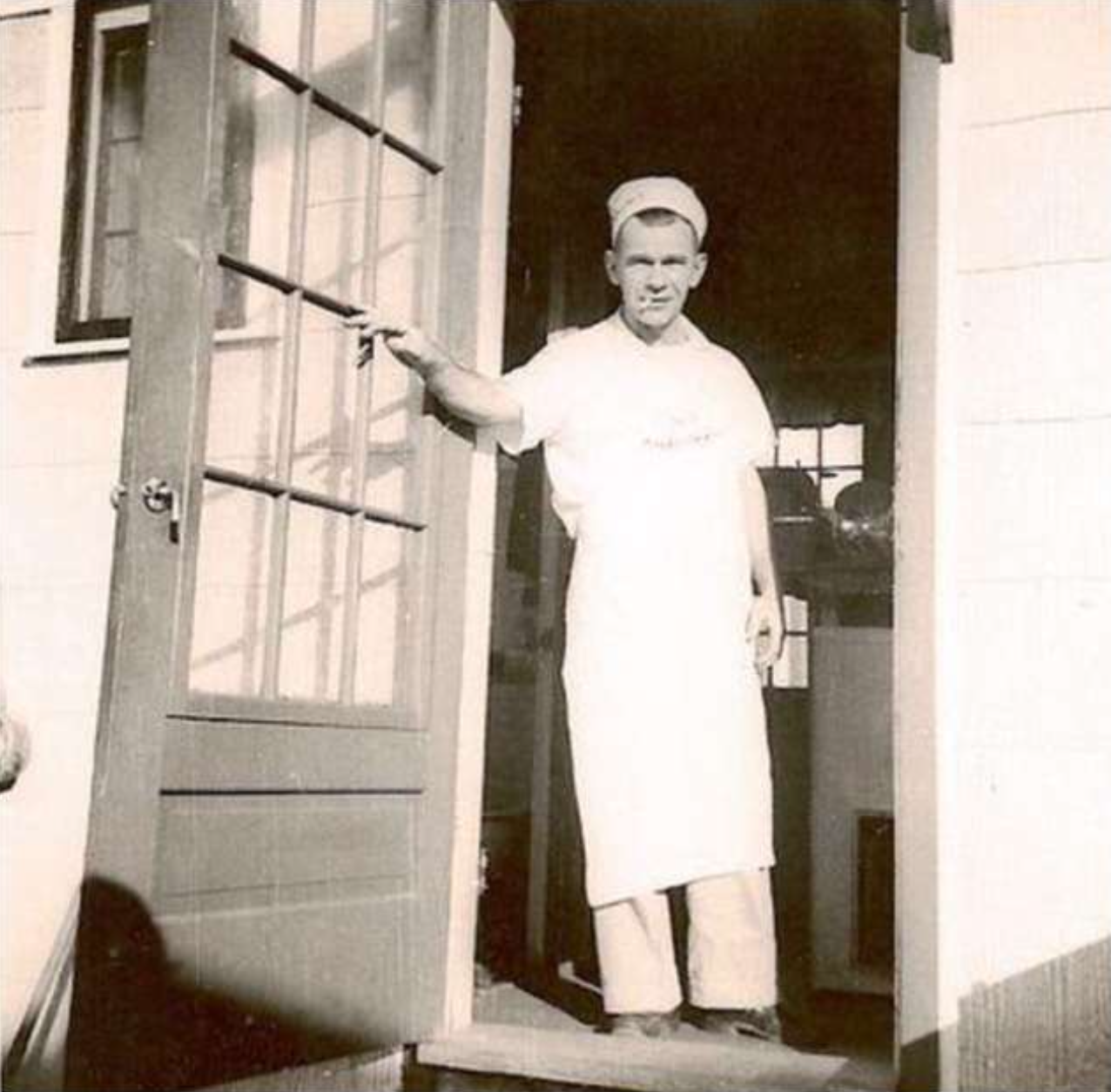
From 1952 to 1955, Tom’s father ran a restaurant on Commercial Street called Joe’s Coffee Locker, located where Twisted Pizza stands today. “It was a small place,” Tom recalls, “but it was busy—especially in the mornings.”
His father’s work extended well beyond the storefront. At the time, Route 6 was still under construction, and crews were working long days building the highway that would eventually connect the Outer Cape more directly to the rest of Massachusetts.
“My dad would drive out twice a day,” Tom says, “bringing coffee, sandwiches, pastries—whatever they needed—to the workers on the road.”
It was a simple act, but one that captured something essential about Provincetown in those years: people took care of each other. Businesses weren’t just businesses—they were part of the fabric of daily life.
Tom still holds onto pieces of that me. “I’ve still got the welcome mat from the restaurant,” he says. “It sat right at the front door.”
Life in Provincetown in those years moved at a different pace—but it was never dull.
Teenagers had their own rituals. “We used to ‘cruise’ Commercial Street,” Tom says. “Drive down, turn around at the Moors, come back up Bradford Street. Do that for an hour—until you ran low on gas or it was time to go home.”
The town itself felt both small and expansive—every street familiar, every corner holding a story. Even the beaches carried different names. “Herring Cove was ‘New Beach’ to us,” he explains. “Because back then, it was new.”
And places weren’t named by maps—they were named by people. “Newcomb Hollow? We called it Mike and Tom’s Beach,” he says. “Because that’s who ran the gas station there.”
Some of those places have changed. Others are gone entirely. Tom remembers visiting Highland Light with his wife years ago—before its dramatic relocation inland. “The first place we stood to look out at the ocean—it’s gone now,” he says. “The bluff just eroded away.”
It’s a quiet reminder that even the most permanent parts of Provincetown are always in motion. There were also the small, everyday pleasures.
Saturday afternoons at the Provincetown Theater. “It cost 12 cents to get in,” Tom says. “Then it went to 18, and we thought that was outrageous. When it hit 25 cents, you couldn’t afford popcorn and a Coke anymore.”
Inside, you’d get a full experience: newsreels, cartoons, and a feature film—some mes split into two parts, so you had to come back the next week. “That was their way of getting you back,” he laughs. “And spending more money.”
But more than anything, what defined Provincetown for Tom was its sense of connection. The town wasn’t just where you lived—it was how you lived.
It was family businesses like Joe’s Coffee Locker.
It was fishermen, mechanics, and shopkeepers who knew each other by name.
It was routines that repeated day after day, year after year—until they became stories. And for Tom Dirsa, those stories never faded. They followed him—through teaching, through writing, through life.
Because long before he became an educator, an author, or a voice behind a camera…He was a boy in Provincetown—watching, listening, and remembering.
Coming Next Week: Part 2 - Fishing, Family, and the Lessons That Last